blog · Elly
Keep track of the things that travel with your child
A practical approach to tracking bags, borrowed books, clothes, and comfort items moving between school, home, and trusted caregivers.
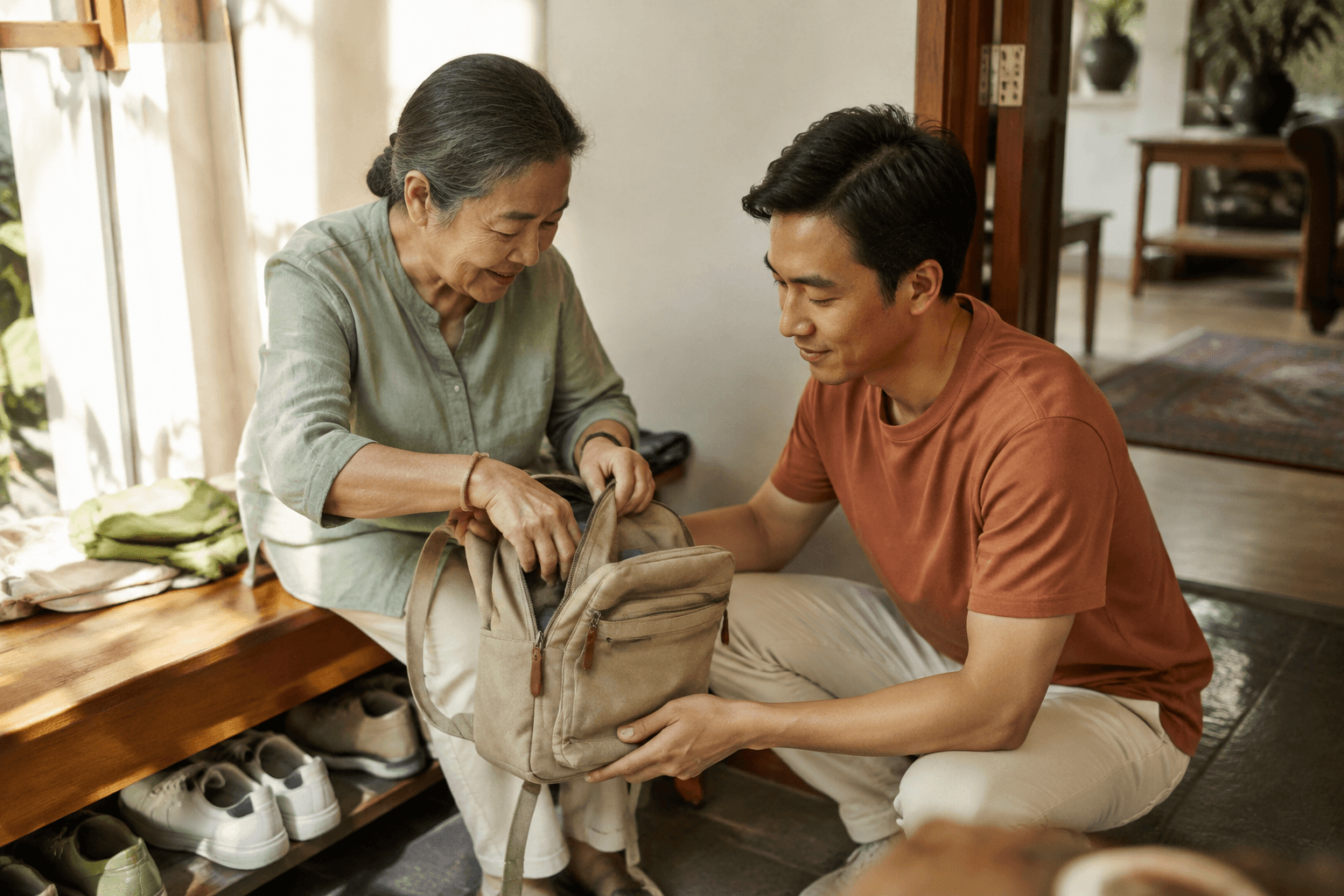
Track the few belongings whose location affects the next day. Write where an item was last seen, when it is needed, and who has agreed to bring it back.
Start with recurring friction
Think about the last few messages asking where something was. A library book, activity bag, or spare coat may repeatedly move between places. Begin with those items rather than creating an inventory of everything a child owns. The list should solve an actual coordination problem. If a belonging never needs discussion, it probably does not need a row. This keeps the tracker short enough to check before a pickup or visit.
Use locations someone else can recognize
“At Nana’s” may still leave several rooms and bags to search. Write the best known location and the date of that observation, then use “to confirm” when you are unsure. Assign one person to check rather than asking everyone to look independently. A tracker is a shared memory aid, not evidence about who last handled an item. Keep the language neutral so people can correct an entry without turning a missing book into an argument.
Attach a return to an existing trip
A return becomes easier to remember when it belongs to a journey already happening. Ask the adult collecting on Friday whether they can bring the activity bag home, then write that agreement beside the item. Cross it out when the bag is actually back. If the journey changes, revisit the return plan too. The linked worksheet gives each item a location, next need, and agreed return so those details stay connected.
Make the transition practical
NAEYC discusses cooperation among families and programs when children move between settings. Here, the narrower household application is to ask what information needs to travel with a particular visit. The belongings tracker is an original Elly example, not a checklist from NAEYC. Review it alongside the next pickup plan, and carry forward only unresolved items. Completed returns should not remain on the list as though somebody still needs to act.
Common questions
What should I do if the item is missing?
Record what is known and agree who will check. Avoid presenting an uncertain location as a confirmed one.
Can the child help with the list?
Choose an appropriate way for your child to participate while the adults remain responsible for the arrangements.
Sources
- NAEYC: Easing Transitions for Children and Families — checked 2026-09-08