
blog · Elly
Toddler meal plan for the week: a practical family planner
Plan a week of toddler meals with a flexible seven-day grid, familiar food examples, daycare gaps, a cupboard check and a practical shopping workflow.
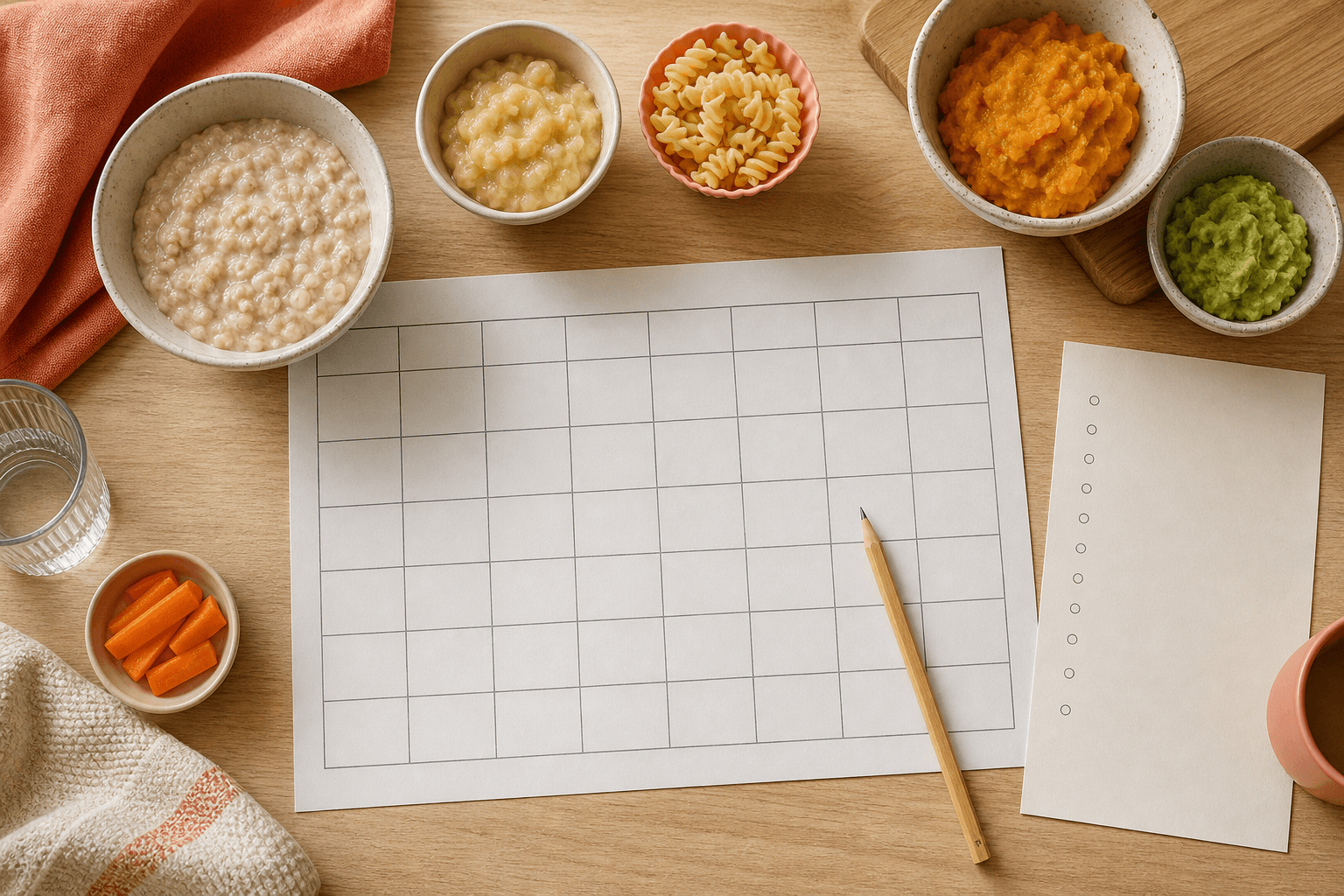
Start with meals your toddler already knows, mark meals supplied by daycare, and choose dishes that fit your week. Write breakfast, lunch, dinner and optional snack ideas for each day, then check what you have before shopping. Treat the grid as food you plan to offer, with room to change it; it is not a target for what your child must eat.
Start with your actual week and familiar foods
To answer “How do I plan a week of toddler meals?”, first put seven days on paper and mark where meals will happen. A dinner at home, a daycare lunch and a meal away from home need different amounts of preparation. Circle the evenings when cooking will be difficult before choosing dishes. Then list familiar family choices for breakfast, lunch, dinner and snacks. Repeating a choice is a practical option; the planner does not need seven different breakfasts. HealthyChildren.org says a little planning can make food preparation practical and advises against forcing children to eat. Our grid and shopping method are original household suggestions, not an AAP program or a tested intervention. Choose food the family can realistically prepare rather than a menu that requires a new recipe every day. Leave an uncertain meal visibly open instead of filling it with a guess.
Source: American Academy of Pediatrics / HealthyChildren.org: Toddler Food & Feeding
Copy this seven-day planning grid
Use one line per day with these columns: breakfast; lunch; dinner; optional familiar snack ideas; preparation needed; and where the meal comes from. The starter grid below deliberately leaves family choices blank. Fill those spaces with dishes already used in your household, repeating them where useful. “Daycare, menu unknown” is a complete planning entry until you receive the menu. It tells you who supplies the meal without pretending to know the food. Put snack ideas in a separate space so you can see what is available without treating every space as a requirement to serve something. Beside the grid, write one familiar fallback dish you can actually make when plans change. Add its ingredients to the cupboard check too. This is an editable planning aid, not a complete diet or a recommendation for portions or feeding times.
- Monday — Breakfast: ___; lunch: ___; dinner: ___; snack ideas: ___; preparation: ___; supplied by: ___.
- Tuesday — Breakfast: ___; lunch: daycare, menu unknown; dinner: ___; snack ideas: ___; preparation: ___; supplied by: ___.
- Wednesday — Breakfast: ___; lunch: ___; dinner: ___; snack ideas: ___; preparation: ___; supplied by: ___.
- Thursday — Breakfast: ___; lunch: ___; dinner: ___; snack ideas: ___; preparation: ___; supplied by: ___.
- Friday — Breakfast: ___; lunch: ___; dinner: ___; snack ideas: ___; preparation: ___; supplied by: ___.
- Saturday — Breakfast: ___; lunch: ___; dinner: ___; snack ideas: ___; preparation: ___; supplied by: ___.
- Sunday — Breakfast: ___; lunch: ___; dinner: ___; snack ideas: ___; preparation: ___; supplied by: ___.
- Fallback dish: ___; ingredients available: ___; missing ingredients: ___.
A worked example for a fictional household
Alex and Morgan are planning for a fictional 20-month-old who already eats the foods in this example. On Monday they write cooked oatmeal with mashed banana for breakfast, soft cooked pasta with mashed vegetables for lunch, and mashed lentils with soft cooked vegetables for dinner. They leave space for their own familiar snack choices. These are possible combinations, not portions, a nutritionally complete menu or a diet endorsed by our sources. Tuesday lunch stays “daycare, menu unknown”; Wednesday repeats a familiar family dish. They fill the remaining days from their existing choices rather than inventing seven new recipes. Food preparation still matters: CDC guidance says shape, size and texture should suit the child’s development, and describes cutting and mashing to address hazards. It also advises upright, supervised eating. A child’s age or a food name alone does not establish readiness or safety.
Source: CDC: Choking Hazards
Turn the grid into a cupboard check and shopping list
Read the completed meal choices once for ingredients, then inspect the cupboard and refrigerator before writing the shopping list. Use two headings: “Already available” and “Need to buy.” For Alex and Morgan, oatmeal and pasta are already available; bananas, lentils and the vegetables chosen for their dishes go on the purchase list if missing. Include the fallback dish in this check. Group purchases in whatever order makes your usual shop easier, and assign a buyer only if another adult is helping. Next to meals requiring preparation, name the specific job and who will do it: “Morgan prepares the vegetables for Monday dinner.” Avoid vague entries such as “sort food,” which leave the next person guessing. Use the household supplies worksheet for missing shared supplies such as cleaning cloths; keep the actual meal ingredients on this food-specific list.
Keep planned food separate from what was offered
When Monday lunch changes, cross out the planned dish and write what was actually offered only if that information helps the household. For example, “Planned pasta; offered familiar fallback instead” explains the change without rating the meal. Do not label an unfinished plate a failed plan. CDC mealtime guidance for children aged 6–24 months says to let the child decide how much to eat, that food need not be finished and that amounts can vary from day to day. This supports flexibility for our fictional 20-month-old; it does not validate our menu. If you want a separate retrospective record, the feeding log is a better home for actual observations. A caregiver who did not see a daycare meal should leave those details unknown. Completing the weekly grid never requires recording every bite or asking a child to finish.
Source: CDC: Tips for Mealtime Routines
Adapt the plan and keep its limits clear
For shared care, send the relevant day’s choices and preparation notes rather than making every adult rewrite the whole week. For a changing work schedule, complete the next few known days and leave the rest editable. For a household cooking one family dish, note any preparation needed for this child without assuming the adult serving is suitable as it stands. This article organizes familiar food choices; it cannot assess nutritional adequacy, allergies, feeding difficulties or an individual child’s needs. Elly’s baby feeding tracker can record solids offered with contextual notes, alongside breast and bottle entries. Shared recording depends on relevant access and may require Elly Plus. That is an optional record of actual care, not an automatic weekly menu or grocery generator. Find the documented feature at https://ellycare.app/features/baby-feeding-tracker. The page’s Download on the App Store link leads to the existing iPhone listing.
Source: Elly: A baby feeding tracker for your whole care team — official product capabilities
Common questions
Can I plan meals without fixing exact portions?
Yes. List dishes, ingredients and preparation tasks without setting a required amount to eat. The grid is a plan for food you intend to offer, not a plate-completion target.
How can I plan around meals provided by daycare?
Mark the meal as daycare-provided. Add the menu if known; otherwise leave the food unknown. Plan only the meals and preparation your household actually handles.
What should I change when a meal is not eaten?
Keep any useful observation separate from the plan, then review practical details such as unused ingredients or preparation work. Do not use the worksheet to diagnose refusal or prescribe a feeding response. It is a household planner, not treatment for picky eating.
Sources and further reading
References support the passages where they are cited. Household examples and worksheets are Elly’s own suggestions.